

Let’s start this blog with a fun and simple game. I will name a random product or a food item. You should say the first brand that comes to your mind. It’s a rapid fire round. So, be quick.
Let’s begin.
- Lunch box
- Instant noodles
- Expensive watch
- Chicken popcorn and french fries
- Aloo Bhujia
- Sports shoes
- Cheese
- Fantasy cricket app
Now, I’ll guess the brands that you chose. If I get 4 of them right, this blog post is for you. (Remember, I’m only talking about the first brand that came to your mind when you saw the list.)
- Tupperware
- Maggi
- Rolex
- KFC
- Haldiram’s
- Adidas
- Amul
- Dream 11
Let’s begin with why you associated certain brands with these items. The first reason is obviously the brand’s popularity. The brand has been around for a long time and has a huge customer base. You see the brand everywhere in your day-to-day life. You either use it or see the people around you use it. The brand could be global.
On the other hand, there is the ‘authenticity’ factor. We subconsciously believe that a product is ‘authentic’ or ‘good’ only if it comes from the part of the world it’s famous for.
KFC’s rice bowl was a massive failure as it is a brand known for western fast food. The rice bowl could never compete in a country whose staple food is rice. People would rather eat rice at home or a local restaurant than go to KFC.
On the other hand, Domino’s was a hit in India but failed on a grand scale in Italy. It was for obvious reasons. The American brand was able to popularise pizza in a country where pizza was unheard of. But it failed to make pennies in a country known for pizzas. So, Domino’s shut down all its shops across Italy and left for good.
It’s not just limited to these two brands. No matter how good a product is, foreign brands face fierce competition from native brands when selling native commodities.
For example: Swiss chocolates, German cars, Italian pizzas, French wine, Indian spices, Chinese acupuncture and so on.
Your mind automatically associates a product with its native land. So, is there a hack to break this cycle?
Yes, brands do that by hiding their roots. It has been going on for decades.
Guess the country of origin of the following brands.
- Da Milano
- Louis Philippe
- Raymond
- Peter England
- Lakmé
- Allen Solly
- Monte Carlo
- Munich Polo
- Colorbar USA
- Van Heusen
They are all Indian brands with foreign sounding names. Some of them were acquired by Indian companies. The others originated here. Most of the clothing and cosmetics brands follow this route.
The reverse is also true. Here are some Indian sounding brands that are actually foreign brands.
- Hindustan Unilever (a subsidiary of British company Unilever)
- Bata (Czechoslovakia)
- Indian Motorcycle (USA)
- BSA Cycles (UK)
- Boost (Switzerland)
- Vicks (USA)
- Maggi (Switzerland)
- Reynolds (USA)
- Lifebuoy (British)
- Tide (USA)
Do Indians prefer foreign companies over their own?
Yes. When it comes to clothing, cosmetics, automobiles, accessories and phones, the majority of Indians do not prefer homegrown brands.
What is the reason?
- Colonial mindset
- If it sounds foreign, it must be of better quality
- Peer pressure
- Only expensive brands are good mindset
How are local brands tacking this issue?
- Catchy names
What’s common between Nykaa, Chumbak, Bewakoof, Lenskart and Cafe Coffee Day?
They have fancy names that are unique and memorable. This has greatly resonated with youngsters, who are their major customers. They also do a good job of embracing the western influence and blending with Indian ideologies. - Celebrity endorsements
BoAt partnered with cricketers like KL Rahul, Hardik Pandya, Shilkhar Dhawan, Rishab Pant and Jasprit Bumrah to promote their brand. BoAt also released limited edition IPL merchandise. This grabbed a lot of eyeballs, including mine. I bought the CSK edition.
Fastrack collaborated with Vijay Devarkonda for its brand campaign ‘Be Both‘. The campaign celebrated the youth’s ability to balance contradictory ideas and beliefs, showcasing the brand’s philosophy of embracing duality. - Strong marketing game
Amul is the king of copywriting. Their one-liners have withstood the test of time. They come up with witty puns that mix current affairs and brand marketing. Here are some examples of intelligent advertising.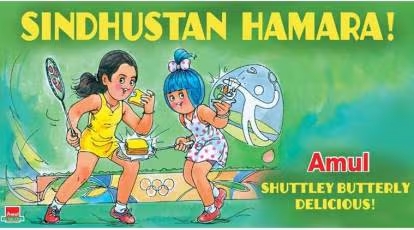
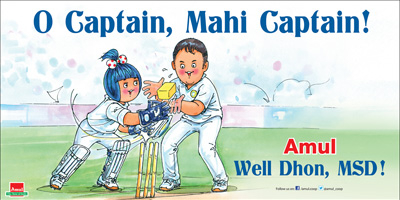

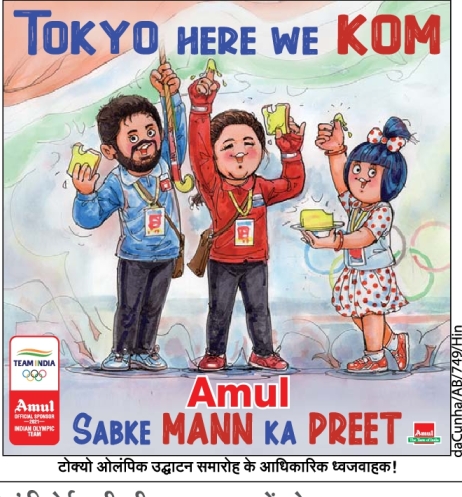

So, can Indian brands never become popular with Indian names?
While many marketers would prefer hiding their roots, there are timeless Indian brands that have withstood the test of time and still reign the market.
- Parle-G
- Amul
- MRF
- Tata
- Haldiram’s
Can homegrown and foreign brands coexist in the market?
Yes, we cannot resist globalisation. At the same time, we cannot wipe away our homegrown sellers. To maintain a healthy balance, the government should encourage small business owners with lucrative schemes and aids. Consumers should give more preference to quality, whether it’s a homegrown or foreign brand. Finally, business owners should offer high-quality products and advertise them better. If the quality is good, any brand can stand the test of time.
So, the next time you go shopping, remember to focus on the quality rather than the brand’s lineage.
Happy shopping 🙂
 The Marketopedia